

Blog
How to Clean a Window AC Unit : A Complete Step-by-Step Guide

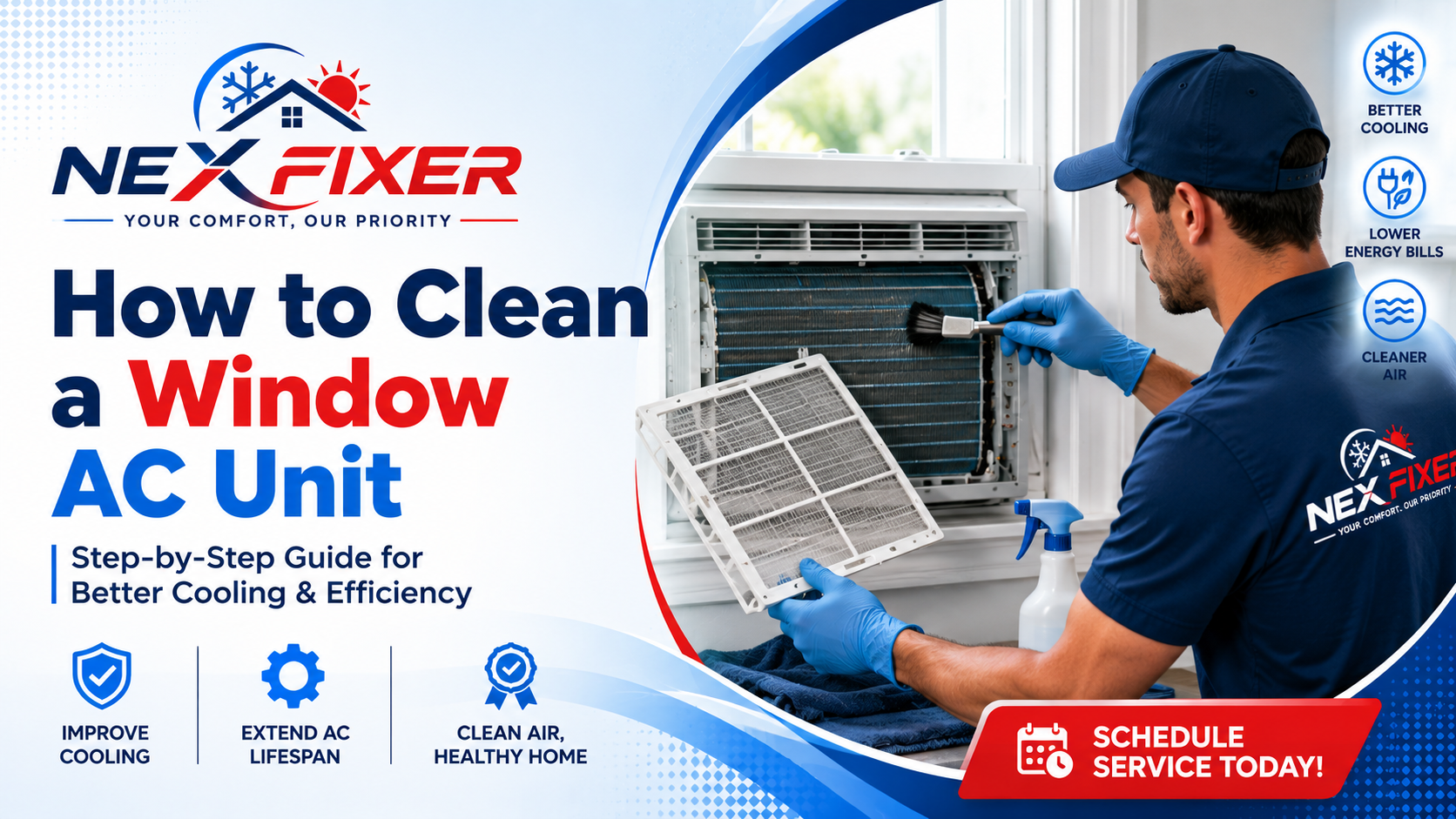
A window air conditioner works hard all summer long, pulling in dust, pollen, and moisture every time it runs. Over months of use, that buildup turns into clogged filters, dirty coils, and — in humid climates like Houston — mold growth inside the unit. If you’ve been searching “how to clean a window AC unit” because your cooling feels weaker or there’s a musty smell coming from the vents, this guide from NexFixer walks you through the full process, step by step.
Whether you want to know how to clean window AC units for the first time, how to clean out a window AC unit that hasn’t been touched in years, or specifically how to clean mold out of a window AC unit, we’ll cover it all below — including how to do it without removing the unit from your window.
Why Cleaning Your Window AC Unit Matters
A dirty window AC unit doesn’t just smell bad — it actively works against you. Dust and grime on the coils reduce heat transfer, forcing the compressor to run longer to reach the same temperature. A clogged filter restricts airflow, making rooms feel warm even when the unit is running non-stop. And because window units constantly pull in moist air and drip condensation, they’re one of the most common places for mold to develop in a home.
Regular cleaning helps you:
- Restore full cooling power
- Lower your energy bills
- Improve indoor air quality
- Extend the lifespan of your unit
- Eliminate musty odors caused by mold and mildew
What You'll Need
- Phillips screwdriver (for models with a removable front cover)
- Soft brush or vacuum with a brush attachment
- Mild dish soap or a coil cleaning spray
- Spray bottle with a water-vinegar solution (for mold)
- Soft cloth or sponge
- Fin comb (optional, for bent coil fins)
- Gloves and a mask (recommended when dealing with mold)
How to Clean a Window AC Unit Without Removing It
You don’t need a full uninstall to give your unit a proper cleaning. Here’s how to clean a window AC unit without removing it from the frame:
Step 1: Turn Off and Unplug the Unit
Safety first. Always unplug the AC before opening any panel or touching internal components.
Step 2: Remove the Front Grille and Filter
Most window units have a front panel or grille that pops or slides off, giving you access to the filter. This is the easiest part of learning how to clean window AC unit filter components — simply slide the filter out for cleaning.
Step 3: Clean the Filter
Vacuum loose dust off the filter first, then wash it with warm water and mild dish soap. Rinse thoroughly and let it air dry completely before putting it back — a damp filter reinstalled too soon encourages mold growth.
Step 4: Vacuum the Interior
With the front cover off and filter removed, use a vacuum with a brush attachment to gently remove dust and debris from the visible interior, including the fan blades and housing.
Step 5: Clean the Coils
This is a key step in how to clean the coils on a window AC unit properly. Lightly spray the evaporator coil (the one facing indoors) with a coil-safe cleaning spray or a mild soap-and-water solution. Let it sit for a few minutes to loosen grime, then wipe gently with a soft cloth. Avoid bending the thin metal fins — if they’re already bent, a fin comb can straighten them and restore proper airflow.
Step 6: Wipe Down the Housing and Drain Area
Wipe the interior housing and drain pan with a damp cloth to remove residual dust and any standing moisture, which is often where mold starts to form.
Step 7: Reassemble and Test
Once everything is fully dry, reattach the filter and front grille, plug the unit back in, and run it for a few minutes to confirm airflow and cooling feel back to normal.
This process covers how to clean the inside of a window AC unit thoroughly without ever needing to pull the whole unit out of the window frame.
How to Clean Mold Out of a Window AC Unit
If you’ve noticed black or greenish spots, a musty smell, or visible fuzzy growth inside your unit, here’s how to clean mold from a window AC unit safely:
- Unplug the unit and remove the front panel and filter as described above.
- Mix a cleaning solution of equal parts white vinegar and water (vinegar is effective against mold without the harsh fumes of bleach in an enclosed space).
- Spray affected areas directly on visible mold on the coils, housing, and drain pan. Let it sit for 10–15 minutes.
- Scrub gently with a soft brush to loosen mold from surfaces, especially around the drain pan where moisture collects.
- Wipe away residue with a clean, damp cloth, then dry all components fully with a clean towel or by air-drying before reassembly.
- Clean or replace the filter — mold spores often collect there first, so if your filter is already showing dark spots, it’s often easier to replace it rather than deep clean it.
- Check the drain line and pan for standing water, since trapped moisture is what allows mold to keep coming back even after a good cleaning.
If mold keeps returning even after a thorough cleaning, it may point to a drainage issue or a unit that isn’t venting moisture properly — something worth having a professional inspect.
How to Clean an AC Window Unit Filter On Its Own
If you just need a quick refresh between deep cleanings, here’s how to clean AC filter window unit components in under 10 minutes:
- Turn off and unplug the unit
- Slide or pop out the filter
- Vacuum loose debris
- Wash with warm soapy water
- Rinse and shake off excess water
- Let it air dry fully (at least a few hours) before reinserting
Doing this monthly during peak cooling season keeps airflow strong and reduces strain on the rest of the system.
How Often Should You Clean Your Window AC Unit?
- Filter: Every 2–4 weeks during regular use
- Coils and interior: Every 1–2 months during cooling season
- Full deep clean (including mold check): At the start and end of every summer
If you use your unit heavily, live in a humid climate like Houston, or have pets or allergies in the home, cleaning more frequently helps keep performance and air quality where they should be.
When to Call a Professional Instead
Learning how to clean your window AC unit at home handles most routine maintenance, but there are times when it’s worth calling in a professional:
- Mold keeps returning despite repeated cleaning
- The unit is blowing warm air even after cleaning
- You notice water leaking beyond the drain pan
- The coils are damaged, corroded, or difficult to access safely
- The unit makes unusual noises after reassembly
If cleaning doesn’t resolve weak airflow or warm air, the issue may be mechanical rather than dirt-related — refrigerant, electrical, or compressor problems that a DIY clean can’t fix. NexFixer’s AC cleaning service in Houston, TX covers deep coil, filter, and mold cleaning for both window and central systems, and if something more serious is going on, our team can move straight into AC repair diagnostics during the same visit.
For homes or businesses considering an upgrade instead of continued repairs on an older window unit, we also offer AC installation services in Houston for more efficient, longer-lasting cooling systems.
Explore our full range of AC services or contact NexFixer to schedule a professional cleaning or repair — before Houston’s heat and humidity make the problem worse.
Frequently Asked Questions
How do I clean a window AC unit without removing it from the window?
Unplug the unit, remove the front grille and filter, vacuum the interior, clean the coils with a mild soap solution or coil cleaner, wipe down the housing and drain pan, then let everything dry fully before reassembling. The whole process can be done without uninstalling the unit.
How do I clean mold out of a window AC unit?
Unplug the unit, spray a vinegar-and-water solution on visible mold in the coils, housing, and drain pan, let it sit for 10–15 minutes, scrub gently, and wipe clean. Dry all parts fully before running the unit again, and check the drain line for standing water that could cause mold to return.
How often should I clean my window AC unit?
Clean the filter every 2–4 weeks during regular use, clean the coils and interior every 1–2 months during cooling season, and do a full deep clean at the start and end of summer.
How do I clean the coils on a window AC unit?
Spray the evaporator coil with a mild soap-and-water solution or a coil-safe cleaner, let it sit briefly, then wipe gently with a soft cloth. Avoid bending the thin metal fins, and use a fin comb to straighten them if needed.
Can I use bleach to clean mold from my window AC unit?
A vinegar-and-water solution is generally recommended over bleach for AC components, since bleach fumes can be harsh in an enclosed space and may not fully kill mold at the root. If mold is severe or keeps returning, a professional cleaning is safer and more effective.
Why does my window AC unit keep getting moldy?
Recurring mold usually points to trapped moisture — often from a clogged or improperly angled drain line, high humidity, or a filter that isn’t being cleaned or replaced often enough. If cleaning doesn’t stop it from coming back, a professional inspection can identify the underlying drainage issue.
Why is my window AC not cooling well even after cleaning?
If cleaning doesn’t restore cooling performance, the issue may be mechanical — such as low refrigerant, a failing compressor, or an electrical fault — rather than dirt-related. At that point, it’s best to schedule a professional AC repair diagnostic.
Is it safe to clean a window AC unit myself?
Yes, routine cleaning — filter washing, coil wiping, and mold removal on visible surfaces — is safe to do yourself as long as the unit is unplugged first. Repairs involving refrigerant, electrical components, or internal mechanical parts should be left to a licensed technician.
Need professional help? Contact NexFixer or call (832) 981-4634 for AC cleaning, repair, and installation services across Houston, TX.


