

Blog
How to Clean AC Coils – A Comprehensive Guide

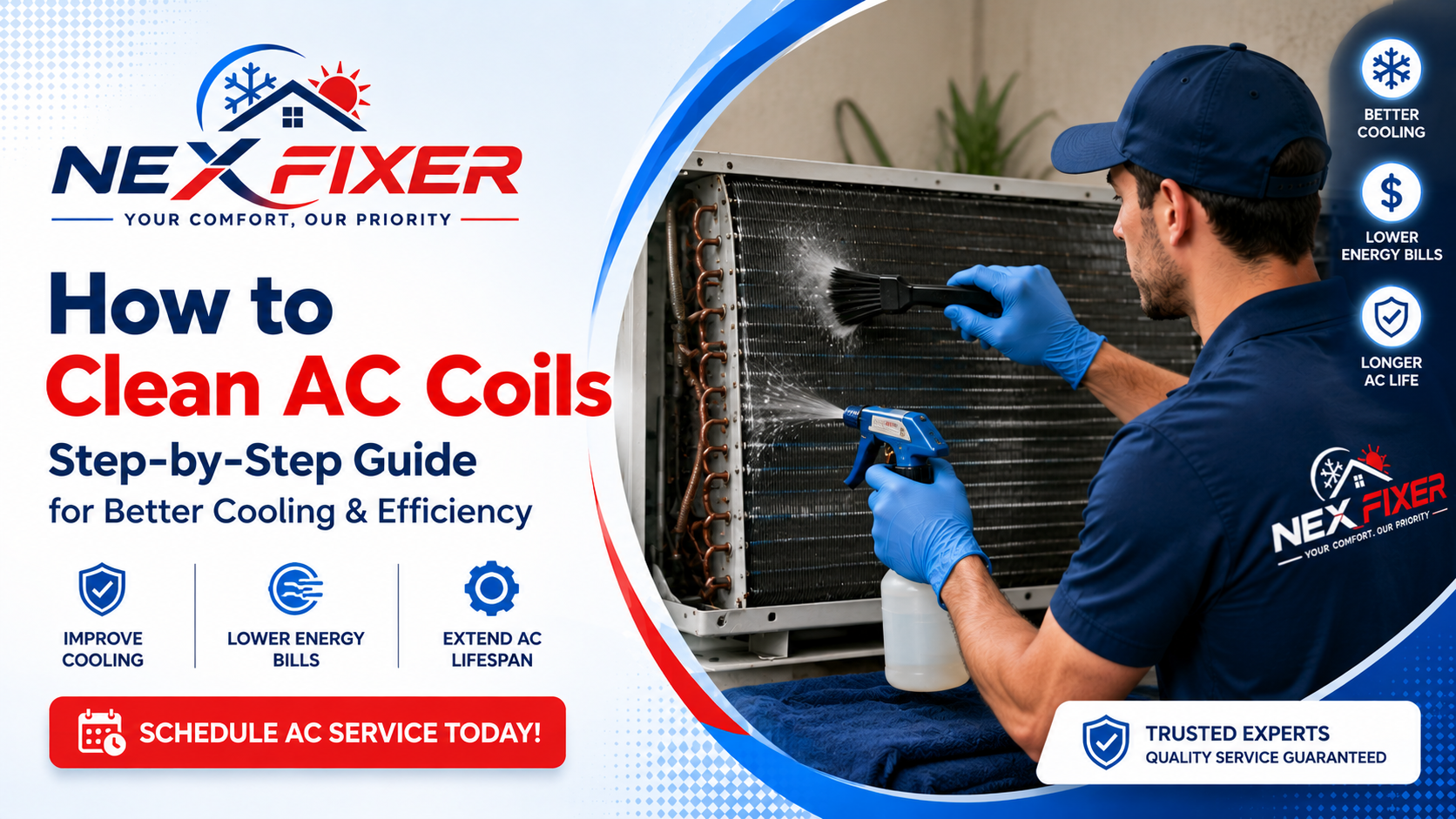
If your air conditioner has been blowing warm air, running longer than usual, or your electricity bill has quietly crept up over the last few months, there’s a good chance the problem isn’t your compressor or your thermostat at all. It’s probably something much simpler — dirty coils. At Nex Fixer, this is one of the most common issues we run into when we inspect AC units across Houston homes, and honestly, it’s one of the easiest problems to prevent once you know what you’re doing.
This guide walks you through exactly how to clean AC coils, whether you’re dealing with the indoor evaporator coil, the outdoor condenser coil, or even a window unit. We’ll also cover how often you should be doing this, what it typically costs if you’d rather leave it to a professional, and answer the questions our Nex Fixer customers ask us the most.
Why Coil Cleaning Actually Matters
Before we get into the “how,” it helps to understand the “why.” Your AC system has two main coils — the evaporator coil sitting inside your home (usually near the air handler or furnace) and the condenser coil sitting outside in the metal cabinet. Together, they’re responsible for absorbing heat from your indoor air and releasing it outside. That’s the entire cooling process in a nutshell.
When dust, pollen, pet hair, or grime builds up on either coil, it acts like a blanket. Heat transfer slows down, your system has to run longer to reach the same temperature, and over time this extra strain can shorten the life of your compressor. We’ve seen units at Nex Fixer that were running fine mechanically but were still struggling simply because nobody had cleaned the coils in two or three years. It’s a small maintenance task with a surprisingly big impact on performance and your monthly power bill.
Signs Your AC Coils Need Cleaning
You don’t need a technician to tell you something’s off. A few warning signs usually show up first:
- Weak or reduced airflow from your vents
- Ice or frost forming on the indoor coil or refrigerant lines
- The outdoor unit looking visibly clogged with leaves, grass clippings, or dust
- Higher humidity indoors even with the AC running
- A noticeable jump in your utility bill without any change in usage
- Musty smells when the system kicks on
If you’re noticing two or more of these, it’s a strong hint that it’s time to clean your AC coils — or have someone from Nex Fixer take a look if you’re not comfortable doing it yourself.
What You'll Need Before You Start
Cleaning your coils isn’t complicated, but having the right supplies on hand makes the job go a lot smoother:
- A soft-bristle brush or a fin comb
- A coil cleaning spray (look for a “no-rinse” foaming coil cleaner at any hardware store)
- A garden hose with a gentle spray nozzle (for outdoor coils only)
- A shop vacuum or a regular vacuum with a brush attachment
- Work gloves and safety glasses
- A screwdriver to remove access panels
And one thing that’s easy to forget: always shut off power to the unit at the breaker or the disconnect box before you touch anything. Coils sit right next to electrical components, and safety should always come first.
How to Clean AC Evaporator Coils Inside the House
The evaporator coil is the one most homeowners neglect, mainly because it’s hidden inside the air handler and isn’t something you see every day. Here’s how to clean AC evaporator coils inside the house without damaging anything:
- Turn off the power. Shut off the breaker connected to your indoor unit.
- Locate the access panel. This is usually on the side or front of your air handler or furnace, held on with a few screws or clips.
- Inspect the coil. Light dust can often be handled with a vacuum brush attachment. Heavier grime or mold buildup calls for a coil cleaner.
- Apply a no-rinse coil cleaner. Spray it evenly across the coil fins, following the product instructions. Most foaming cleaners lift dirt and drip it into the drain pan, so you don’t need to rinse.
- Let it sit and drain. Give it the recommended time (usually 10–15 minutes) so the foam can break down grime and drain away naturally.
- Check the drain line. While the panel is open, it’s worth confirming the condensate drain isn’t clogged, since a blocked drain is one of the most common causes of water damage near indoor units.
- Reassemble and restore power. Put the panel back, tighten the screws, and switch the breaker back on.
If your indoor coil has heavy mold growth or is caked in years of buildup, it’s usually better to call in a professional rather than risk bending the delicate aluminum fins. Nex Fixer’s technicians handle this exact situation regularly as part of our AC Cleaning services.
How to Clean AC Coils Inside — A Quick Note on Access
A lot of people search for “how to clean coils on AC unit inside” or “how to clean indoor AC coils” expecting a totally different process from the outdoor unit — but really, it’s the same evaporator coil we just covered above. The main difference is accessibility. Some systems have the coil tucked behind ductwork or in a tight attic space, which makes DIY cleaning trickier. If you can’t comfortably reach the panel or see the coil clearly, that’s your cue to bring in a technician instead of forcing it.
How to Clean AC Condenser Coils (Outdoor Unit)
The outdoor condenser coil takes the most abuse simply because it sits outside, exposed to dust, cut grass, cottonwood seeds, and whatever else the wind blows its way. Here’s how to clean the outside AC unit coils properly:
- Cut the power. Flip the disconnect switch near the unit or shut off the breaker.
- Clear away debris. Remove leaves, twigs, and grass clippings from around and inside the cabinet. Trim back any plants growing within two feet of the unit.
- Remove the top grille (if needed). On some units, unscrewing the top fan grille gives you better access to the coil fins.
- Rinse from the inside out. Using a garden hose on a gentle setting, spray the coil from the inside outward. This pushes debris out the way it came in, rather than driving it deeper into the fins. Avoid using a pressure washer — it can bend the delicate fins.
- Apply coil cleaner if needed. For units with heavier grime, spray on a condenser coil cleaner, let it sit for the recommended time, then rinse thoroughly.
- Straighten bent fins. A fin comb can gently straighten any bent aluminum fins, which helps restore proper airflow.
- Let it dry, then restore power. Give the unit at least 30 minutes to dry before turning the electricity back on.
This same process applies whether you’re cleaning an outdoor AC condenser coil for a central system or servicing a smaller split unit’s outdoor component.
How to Clean a Coil on a Window AC Unit
Window units are a bit more compact, so cleaning them looks slightly different:
- Unplug the unit completely before doing anything.
- Remove the front grille and filter.
- Slide the unit partially out of its housing if your model allows it, so you can access both the front (evaporator) and rear (condenser) coils.
- Vacuum loose dust with a brush attachment first.
- Spray on a coil cleaner and let it foam and drain according to the label.
- Wipe down the housing, reinstall the filter, and let everything dry before plugging it back in.
Since window units run in tighter spaces with less airflow around them, their coils tend to collect dust faster — so a quicker cleaning cycle is usually a good idea.
How Much Does It Cost to Clean AC Coils?
If you’re weighing DIY against hiring a professional, cost is usually the deciding factor. On average, professional AC coil cleaning runs somewhere between $100 and $300, depending on how dirty the coils are, whether both indoor and outdoor coils need attention, and your local market rates. DIY cleaning, by comparison, mostly costs you the price of a coil cleaner spray (usually $10–$20) plus your own time.
That said, DIY has its limits. If your coils haven’t been touched in years, if there’s visible mold, or if you’re not confident opening up the air handler, professional cleaning is worth the cost. It also gives a technician the chance to catch small issues — like a failing capacitor or a slow refrigerant leak — before they turn into a bigger repair bill. Nex Fixer offers upfront, transparent pricing on every cleaning job, so you’ll always know the cost before any work begins. You can request a quote through our contact page.
How Often to Clean AC Coils
As a general rule, both the indoor and outdoor coils should be cleaned at least once a year — ideally right before the start of the hot season here in Houston. That said, a few factors might mean you need to clean them more often:
- You have pets that shed indoors
- Your home is near construction, a busy road, or open fields
- You run your AC almost continuously through the summer
- You’ve noticed any of the warning signs mentioned earlier
Homes with heavy dust or pollen exposure sometimes benefit from a light coil check every six months, even if a full deep clean is only needed annually. If you’re not sure where your system stands, Nex Fixer can inspect both coils during a routine visit and recommend a schedule based on your actual usage rather than a generic timeline.
DIY vs. Professional Coil Cleaning: Which Should You Choose?
Light, routine dust buildup is usually safe to handle yourself with a vacuum and a basic coil cleaner spray. But there are a few situations where it’s smarter to call in help:
- The coil is caked in mold or has a persistent musty smell
- You’re not comfortable working near electrical components
- The coil is in a hard-to-reach spot, like a cramped attic
- You’ve never opened your air handler before and aren’t sure what you’re looking at
- The unit is still running poorly even after a basic cleaning
Getting it wrong — bending fins, damaging refrigerant lines, or missing a clogged drain — can end up costing more to fix than a professional cleaning would have in the first place. Our team at Nex Fixer handles both AC Repair and cleaning, so if a cleaning visit uncovers a bigger issue, it can usually be addressed in the same appointment.
Final Thoughts
Clean coils are one of the simplest ways to keep your air conditioner running efficiently, lower your energy bills, and avoid premature breakdowns. Whether you’re tackling the indoor evaporator coil, the outdoor condenser, or a window unit, the process comes down to the same basics: cut the power, clear away debris, apply a proper coil cleaner, and rinse or drain carefully without damaging the fins.
If you’d rather skip the ladder and the coil spray altogether, Nex Fixer is just a call away. Our Houston-based technicians handle everything from routine coil cleanings to full AC system diagnostics, and we’re happy to walk you through what your specific system needs. Reach out through our Our Services page or give us a call to book a visit.
Frequently Asked Questions
How do I know if my AC coils are dirty without opening the unit?
Reduced airflow, warm air from the vents, ice buildup on the refrigerant line, and a rising electricity bill are all common signs of dirty coils, even before you visually inspect them.
Can I use regular soap and water to clean AC coils?
It’s not recommended. Household soaps can leave residue that attracts more dirt over time. A dedicated coil cleaner is formulated to break down grease and grime without damaging the aluminum fins.
Is it safe to clean AC coils myself?
Yes, for light dust and debris, DIY cleaning is generally safe as long as you shut off power first and handle the fins gently. Heavier buildup, mold, or hard-to-reach coils are better left to a professional.
Do I need to clean both the indoor and outdoor coils?
Yes. Both the evaporator (indoor) and condenser (outdoor) coils play a role in heat transfer, so neglecting either one can reduce your system’s overall efficiency.
Will dirty coils cause my AC to stop working completely?
Not usually right away, but over time, dirty coils force the compressor to work harder, which can lead to overheating, frozen coils, or a full system breakdown if left unaddressed.
How long does professional coil cleaning take?
Most professional coil cleaning visits, like those from Nex Fixer, take between one and two hours depending on how dirty the system is and whether both coils need service.
Does cleaning AC coils improve indoor air quality?
Yes. Removing dust, mold, and bacteria from the coils reduces what gets circulated through your home’s air, which can noticeably improve indoor air quality.


